
Platinum Newsletter: The Next Phase in Out Training Cycle & The Importance of Dryland

Platinum Group Newsletter
The Next Phase in Our Training Cycle & The Importance of Dryland
By: Jackson Buyers
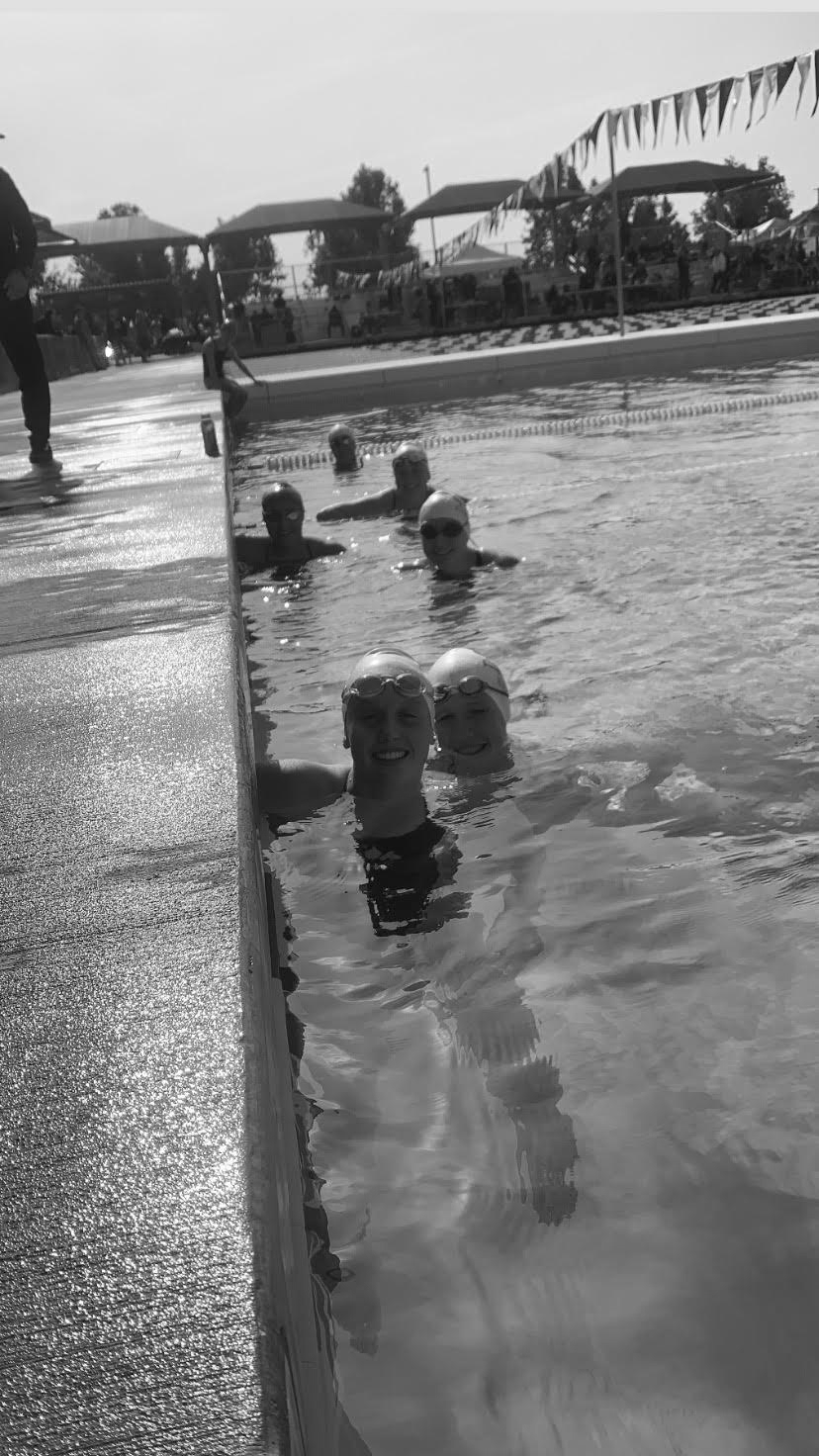
As an Ace Aquatics swimmer, I will display discipline & hard work. I will always be willing to work tirelessly towards my goals because I understand that well thought out goals take no less than 100% of my effort.
Monday will be the start of our next training cycle. This is an outline of our season up until the meet in Utah in December:
Team Bonding
August 26th - August 28th
Technique Weeks
Freestyle: August 29th - September 4th
Backstroke: September 5th - September 11th
Breaststroke: September 12th - September 18th
Butterfly: September 19th - September 25th
Starts & Turns: September 26th - October 2nd
Aerobic Training (High Yardage)
October 3rd - November 6th
Anaerobic Training (Normal Training)
November 7th - December 4th
Race Pace/Taper (Depends on Athlete)
December 1st - December 9th
Monday marks the start of our “Anaerobic Training” cycle. This does not mean that it is sprint practices only. This means that we add a greater importance on sprinting, race prep, and race pace to our training. Below you can find the exact layout for the next several weeks. We have built our base, and now it is time to learn how to race. Get ready for an awesome month of training!
Monday AM - Mindful Monday
-
Focus: Motivation, Mobility, Coordination
-
Mind: Motivational Video, Weekly Goals,
-
Body: Mobility, Core, Balance
-
Mobility & Injury Prevention: Back, Shoulders, Hips, Knees
Monday PM - Meters Monday
-
Focus: Distance Free, Distance IM
-
Drill Set: Freestyle Technique
-
Pre Set: Distance Pull, Easy Speed
-
Main Set: Short Interval, High Yardage, Distance Pace
Tuesday - Tyson Tuesdays
-
Focus: Power, Race Pace
-
Drill Set: Choice Technique, Kick
-
Pre Set: Cords, Parachutes, Vertical Kick
-
Main Set: USRPT (Ultra-Short-Race-Pace-Training)
Wednesday AM - WOD Wednesday
-
Focus: 30 Minute High Intensity Workout
-
Mind: 3 Positive Comments, Daily Goals
-
Body: 30 Minute Full Body WOD
-
Mobility & Injury Prevention: Back, Hip, Knee, Ankle
Wednesday PM - Wow… Typical Jackson… Wednesdays
-
Focus: The 200 IM
Thursday - TGI Thursday
-
Focus: Recovery, Technique
-
Drill Set: Choice Technique
Friday AM - FAST Fridays
-
Focus: Fast Twitch, Explosive Power
-
Mind: Re-Evaluate Week, Daily Goals
-
Body: Low Reps, High Intensity (Jump, Throws, Sprints, etc.)
-
Mobility & Injury Prevention: Back, Shoulders, Hips, Knees
Friday PM - FAST Fridays
-
Warm Up: Meet Warm Up
-
Main Set: Racing OTBs
Saturday - Surprise Saturdays!
Importance of Dryland
Below are the four reasons why dryland is such an important part of our training. The main four reasons are the following:
Injury Prevention, Coordination, Strength, and Mobility. Read my explanation for each below.
Injury Prevention
As with all athletes, swimmers perform similar movements repeatedly over long periods of time. This leads to overuse and underutilization of many muscle groups in swimmers bodies. The water is a zero gravity environment, so there is no immediate physical feedback (such as falling over) given to our athletes when they lack stability. Instead, physical issues show up after long periods of time in the form of injury. Swimmers specifically struggle with issues in their back, shoulders, knees, and hips. I have listed some common injuries below, explained the causes, and how to prevent them. Dryland and strength training are necessary to a swimmers ability to have longevity in the sport.
Kyphosis, Neck & Back Pain
Causes- Poor posture in/out of the water, tightness in the pectoral muscles (breaststroke, crossing over in free/fly), tightness in the hamstrings from kicking, weak back muscles.
Prevention in Water- Avoid “crossing over”, good posture/neutral spine, and warming up your legs prior to kick sets.
Prevention on Dryland-
Stretch- It is important to stretch your hamstrings and your pectoral muscles. Mobility work on the upper spine is necessary.
Ex. Up & Down Dogs, Child Pose, Pigeon Stretch, Foam Roll Crunches, etc.
Strengthen- Core and Back Strength
Ex. Squats, Deadlifts, Planks, Supermans, Deadbugs, etc.
Rotator Cuff Tendonitis, Bicep Tendonitis, & Shoulder Impingement Syndrome
Causes- Crossing over midline on free/fly, swimming too close to your head on backstroke, under rotating or over rotating on long axis stroke (free/back), thrashing/crashing/spinning your arms on the recovery of free/fly, fly arms on freestyle, etc.
Prevention in Water- Pull in a straight line from “figure 11” to a full extension past your hips, have a tight core on long axis strokes, have gentle arms on the recovery portion of every stroke, use a high elbow catch, etc.
Prevention on Dryland-
Stretch- All muscles surrounding your shoulder socket
Stretch Lat, Pec, Bicep, Tricep, and Upper Back Muscles
Ex. Partner Stretches (Lat, Pec, and Prisoner), PVC Series
Strengthen- All muscles surrounding your shoulder socket.
Obliques for long axis stroke rotation.
Ex. Dynamic Shoulder, Mini Band Arms, Rows, Shoulder Taps, I, Y, and Ts, Side Planks & Crunches, etc.
Breaststroker’s Knee & Injuries to Tendons/Ligaments in the Knee
Causes- Not properly warming up prior to breaststroke kick or eggbeater, kicking too wide, kicking the water to either side rather than kicking the water straight back, not having enough flexibility/mobility in the knees/hips/ankles/hamstrings, etc.
Prevention in Water- Always warm up with freestyle kick, keep the kick at almost the width of your shoulders, push the water back with the bottom of your foot, feed should be wider than the knees on the kick, etc.
Prevention on Dryland-
Stretch- Hip, knee, and ankle flexibility are necessary
Ex. Breaststroke ankle sits, fly stretch, hurdler stretch, ankle rolls, quad/hams. stretch
Strengthen- Quads, hamstrings, glutes, groin, tendons and ligaments surrounding the
patella and hips
Ex. Mini band legs, clams, squats, sumos, lunges, single leg exercises, etc.
Coordination
The misconception that swimmers are uncoordinated is not only untrue, but extremely detrimental to the progression of swimmers. If an athlete is not coordinated on land, then they will not be coordinated in the water. Learning how to use your body on land will increase the speed at which a swimmer is able to learn new techniques in the water. Once again, being in a zero gravity environment can negatively affect the progression of an athlete. On land gravity holds us in place. In the water we have to hold ourselves in place, which means we cannot just work on technique. Our body still has to move and adapt to the water we are swimming in. Learning to be coordinated on land, while not necessary, is extremely beneficial.
Strength & Mobility
This last section is the most obvious of all of them. Getting stronger on land means we are able to pull and kick more water when we swim. Now, if we get too strong then we naturally lose the benefits of strength training if we cannot move in the way necessary to swim. Combining strength and mobility leads to faster athletes. Simple. Unlike a sport like football where the movements are more “natural” (running, pushing, bracing, throwing, etc.), swimmers have to move their limbs in a way that is unnatural to the human body (above our heads, behind our backs, feet pressed away from our midline with our knees in, etc.). Swimmers typically have to be hypermobile in the shoulders, knees, and hips, so muscles should be long and lean rather than bulky. Doing just any dryland or strength program will not necessarily help your athlete improve. It is important to set your athlete up with a program that is set up specifically for swimmers.
Why Morning Practices?
We live in an area that has not seen very much success in the sport of swimming. A lot of parents and athletes have the perception that how things are run in Central California are how they are everywhere. This is not true. I know that a lot of you are skeptical about the addition of morning practices, but I wanted to show you the prevalence of morning practice in the sport of swimming. We have a group of athletes that are capable and deserving of competing at the national level, so I looked to the best clubs in the nation. The clubs that are dominating the national level to help you all understand why having morning practices, and more practice time is not only normal, but also may be necessary. Below are the top 10 fastest teams in the nation from 2020-2021. I have listed their estimated practice times per week, along with the number of morning practices they have, along with where I found this information. All of these clubs have attendance requirements as well.
Ace Aquatics- 14 Hours Per Week, 4 x AM Practices Per Week
-
The Nation's Capital Swim Club- 17 Hours, Three x (2 Hour) AM Practices
-
SwimMAC Carolina- 21 Hours, 5 Dryland, 6 x AM Practices
-
Dynamo Swim Club- 17 Hours, 5 Dryland Days, 3 x AM Practices
https://www.teamunify.com/gsdsc/UserFiles/Image/QuickUpload/21-22-scy-practice-sched_081376.pdf
-
NOVA of Virginia Aquatics- 22.5 Hours, Six x (2.5 Hour) AM Practices
https://www.teamunify.com/team/vsnva/page/system/res/124835
-
Mason Manta Rays- 18 Hours, 1 x AM Practices
https://www.teamunify.com/ohmmr/UserFiles/Image/QuickUpload/2021-fall-schedule---post_093361.pdf
-
Sandpipers of Nevada- 19 Hours, 6 x AM Practices
-
Tac Titans - 32 Hours, 6 x AM Practices (I don’t know how or if this one is possible)
-
Swim Atlanta Georgia - 16 Hours, 3 x AM Practices
https://www.swimatlanta.com/schedule/324
-
Lakeside SeaHawks - 18 Hours, 9 x 2 Hours Practices at Unknown Hours
https://lakesideseahawks.org/programs/national/
-
Badger Swim Club- 20.5 Hours, 7 Days of Practice
https://lakesideseahawks.org/programs/national/
I look forward to another great portion of our training cycle. Let get ready for an incredible meet in December! Remeber that we get to, we want to, and we are excited to have the opportunity to do morning drylands. I will see you all tomorrow morning.
“Be thankful for the ability to go to the weight room today…
Make the most of this opportunity & never take it for granted.”
– Dr. Aaron Horschig