


Not long ago, after writing a column about the North Baltimore Aquatic Club and its insane success producing teenage Olympians, I received a call from top Canadian coach Randy Bennett. As the Director of Island Swimming and coach of the Victoria Academy of Swimming, in Victoria, British Columbia, Randy runs one of North America's finest all-around swimming programs. Among his stable of once and future Olympians is 2008 Olympic medalist in the mile, Ryan Cochrane. (North-of-the-border note: Cochrane's best in the 1500 is 14:40.84 - four and a half seconds faster than the American record.) Clearly, Coach Bennett knows a few things about hard work and getting the best out of his swimmers.
However, he wasn't calling to compare notes with the home of Michael Phelps. Randy wanted to talk about the other ones, the ones who break and burnout along the way. He wanted to talk about collateral damage. After expressing loads of respect and praise for the achievements of NBAC, he wondered about the wisdom, for all coaches at every team, in making extreme teenage success the top priority. Then he said something that stuck: "At our program, I tell all our parents that their kids are successful if they swim all the way through." That is, all the way through college. And beyond. Simple as that. Measure success by sticking with it. What goes without saying is that swimmers who are miserable and getting slower seldom stay with it. If you're happy to be at workout, you're probably improving. And if you're improving, why stop?
I was reminded of this conversation last Saturday afternoon while watching swimming lessons in Brooklyn. Standing with me on deck was world class water polo coach, Carl Quigley, of St. Francis College. Coach Quigley has helped keep polo thriving out here on the east coast, far from the So Cal polo hotbeds; in 2005 his St. Francis Terriers advanced to the NCAA Final Four. He has a similar philosophy to Coach Bennett: the longer they stay in the water, however they choose to stay in the water, the better. (Carl practices what he preaches: he's out there swimming in the Long Island Sound, in only Speedo, deep into December each year...)
"The fact is, a lot of kids just get burnt out with the laps," says Coach Quigley. "But that doesn't mean they should hang it up. We have to find ways to keep them into it."
Water polo, of course, can freshen things up in a hurry -- while keeping you just as fit. Same goes for the liberation of open water. Let your swimmer dip beneath those lane lines once in awhile and they might discover a whole new underwater perspective. And it might keep them coming back for the hard stuff later.
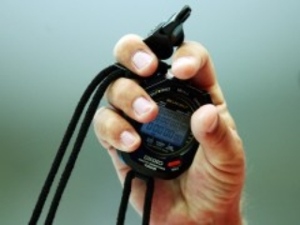
Problem is, too many coaches can get locked into that world of the black line. Their relentless focus on the stopwatch and success NOW, as soon as possible, can burn away the aquatic passions of their young swimmers. And so they quit. Too many do.
Clearly, it's not so easy. Mixing it up, telling parents they just need to stay with it... It takes more than that. And clearly, some swimmers shouldn't be there at all. A discipline-free court jester with zero work ethic might be smiling in the slow lane, and keep his teammates laughing, but at some point he becomes a problem, the opposite of success.
Yet we all know those who should have stuck with it. If only... I can rattle off half a dozen names off the top of my head, faces I haven't seen in decades. Guys and girls who were good, could have been real good, Top Sixteen as age groupers, Junior Nationals their first year of high school, and then... And then others things became more important. Can't blame the coach if suddenly playing the guitar and forming a band sounds more fun than waking up at 5am for workout. But there must be some blame - and some shame - for a coach who fails to see the flickering flame. Fails to measure success by simply keeping his swimmers swimming.
Neil Young has an oft-quoted line from his song "Hey Hey, My, My": "It's better to burnout than to fade away."
He was wrong.
