The Road to Nationals-Alex Wold

The Road to Nationals-Alex Wold
When the temperature is five degrees below zero, it's difficult to imagine competing at an outdoor meet – even if that competition is still over eight months and nearly 2,000 miles away. But with the countdown to the
2010 ConocoPhillips National Championships in Irvine, Calif. already underway, National Team member Alex Wold is doing just that. I caught up with Wold, a senior at the University of Minnesota, prior to the Gopher’s annual training trip to Hawaii. As a middle distance freestyler and 400 IMer, Wold has some intense yardage ahead of him prior to August.
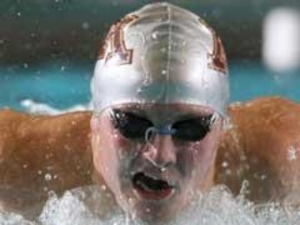
National Team Member: Alex Wold.
Distance from the 2010 ConocoPhillips National Championships: 1,932 miles.
With Nationals still over eight months away and the Big 10 Championships rapidly approaching, what kind of training are you focusing on right now?
Alex: Well, right now we just had our mid-season meet. I know a lot of teams around the nation rest a little bit for that and it is by no means a taper meet for our team. We traveled to Ohio State and got some good racing there. Coming off of that, we are building back up in terms of intensity and yardage. We are heading to Hawaii for a training trip and that is really considered the peak of our season – really focusing on a lot of hard work and technique as we get closer to Big 10s.
As part of the middle distance/distance group, what kind of yardage will you put in while in Hawaii?
Alex: What we do is a bit different than what the sprint group does, and it varies from practice to practice. We do a set called the Janet Evans set – it’s a lot of 500 freestyles and 400 IMs – and it is around 9,900 yards. But then there is also some speed work too, like six one-hundreds standup, with some fast 50s here and there. On average, though, we probably do 14,000 yards a day between 2 practices – maybe a bit more or less depending on what we are focusing on that day.
Alex: What we do is a bit different than what the sprint group does, and it varies from practice to practice. We do a set called the Janet Evans set – it’s a lot of 500 freestyles and 400 IMs – and it is around 9,900 yards. But then there is also some speed work too, like six one-hundreds standup, with some fast 50s here and there. On average, though, we probably do 14,000 yards a day between 2 practices – maybe a bit more or less depending on what we are focusing on that day.
After Big 10s and NCAAs, how will your training change for the long course season?
Alex: My parents live about 15 minutes away from campus, so I never really leave the U of M. I plan on swimming with the Gophers this summer through Nationals. I know it’s hard after a big meet like NCAAs for college, or Nationals/US Opens for club, to get back into it for summer swimming. I plan on taking a week off (after the college season), refocusing, and getting in to the long course mentality. I’ve always liked long course, so it has never been a hard thing for me to get in to.
Alex: My parents live about 15 minutes away from campus, so I never really leave the U of M. I plan on swimming with the Gophers this summer through Nationals. I know it’s hard after a big meet like NCAAs for college, or Nationals/US Opens for club, to get back into it for summer swimming. I plan on taking a week off (after the college season), refocusing, and getting in to the long course mentality. I’ve always liked long course, so it has never been a hard thing for me to get in to.
Will you continue to focus on the 400 IM for the long course season?
Alex: That is my best event, so I do really focus on it. Over the last two years or so, I’ve definitely moved from focusing on pounding the yardage and considering myself a longer distance swimmer to focusing on the details and speed work – things I haven’t really done yet. Last summer and last school year, I really focused on those things and I think that's what helped me. I want to continue to try new things because I think you always have to do new things to improve your times.
Alex: That is my best event, so I do really focus on it. Over the last two years or so, I’ve definitely moved from focusing on pounding the yardage and considering myself a longer distance swimmer to focusing on the details and speed work – things I haven’t really done yet. Last summer and last school year, I really focused on those things and I think that's what helped me. I want to continue to try new things because I think you always have to do new things to improve your times.
How do you stay energized from season to season?
Alex: For college, it's nice that we do go to Hawaii because it breaks up the season nicely. We’re still training hard, but at the same time we’re in Hawaii where it is 80 degrees and nice. There is time to relax and it’s not negative five degrees like it is in Minnesota right now. After the college season, I’m taking a week off to refocus mentally, focus on school for a little bit, and get ready for the next season. One thing that I have done after each taper meet is look back on the season, see what I did, see what worked, and see things that I can improve on for the next season.
Alex: For college, it's nice that we do go to Hawaii because it breaks up the season nicely. We’re still training hard, but at the same time we’re in Hawaii where it is 80 degrees and nice. There is time to relax and it’s not negative five degrees like it is in Minnesota right now. After the college season, I’m taking a week off to refocus mentally, focus on school for a little bit, and get ready for the next season. One thing that I have done after each taper meet is look back on the season, see what I did, see what worked, and see things that I can improve on for the next season.
Is there anything you are looking forward to with regards to summer nationals?
Alex: It’s tough because I am graduating in May, and if you would have asked me two or three years ago if I’d be swimming after I graduated, I probably would have said no. More recent success in the swimming pool has made me want to continue through the summer – US Nationals – and I guess we’ll see how that meet goes and see where I go from there.
Alex: It’s tough because I am graduating in May, and if you would have asked me two or three years ago if I’d be swimming after I graduated, I probably would have said no. More recent success in the swimming pool has made me want to continue through the summer – US Nationals – and I guess we’ll see how that meet goes and see where I go from there.
Is there anything that you are working on mentally to prepare for Nationals?
Alex: So many people just started getting used to the full body suits, and I think right now a lot of people are hesitant (to swim without one), or they don’t really know what swimming times even mean right now. So, I think being confident in your swimming without the suit is something that a lot of swimmers will have to be dealing with. That’s the biggest thing for me right now too – figuring out and getting used to how swimming used to be.
Alex: So many people just started getting used to the full body suits, and I think right now a lot of people are hesitant (to swim without one), or they don’t really know what swimming times even mean right now. So, I think being confident in your swimming without the suit is something that a lot of swimmers will have to be dealing with. That’s the biggest thing for me right now too – figuring out and getting used to how swimming used to be.
What was your favorite swimming road trip?
Alex: Way back in high school, probably around 10th grade, my club team and I went to a meet at the IUPUI pool in Indianapolis. I’ve always liked that pool, it’s probably my favorite pool in the nation, and it was just fun because it was just the coach and about 10 swimmers. It was just fun – we got away for a weekend and were swimming at a meet we tapered for.
Alex: Way back in high school, probably around 10th grade, my club team and I went to a meet at the IUPUI pool in Indianapolis. I’ve always liked that pool, it’s probably my favorite pool in the nation, and it was just fun because it was just the coach and about 10 swimmers. It was just fun – we got away for a weekend and were swimming at a meet we tapered for.
What is your favorite road trip game?
Alex: Actually, probably about two weeks ago we played a fun road trip game. I went to Lacrosse, Wisc. to visit one of my friends. On the way home, we played Cash Cab*. We made our own version – someone in front was looking up possible questions on their cell phone and then would ask us. We even did fake “ask a friend” and “shout outs” where we would call our friends and say we were on the Cash Cab. Everyone was so confused. It was a lot of fun.
Alex: Actually, probably about two weeks ago we played a fun road trip game. I went to Lacrosse, Wisc. to visit one of my friends. On the way home, we played Cash Cab*. We made our own version – someone in front was looking up possible questions on their cell phone and then would ask us. We even did fake “ask a friend” and “shout outs” where we would call our friends and say we were on the Cash Cab. Everyone was so confused. It was a lot of fun.
How about a fun fact about you most people don’t know?
Alex: That’s a tough one! It’s more related to my family, but my family owns an apple orchard in northern Minnesota. It’s kind of like a hobby farm that my dad put together about 10 years ago. I’ve always enjoyed going up there and being at one with nature.
Alex: That’s a tough one! It’s more related to my family, but my family owns an apple orchard in northern Minnesota. It’s kind of like a hobby farm that my dad put together about 10 years ago. I’ve always enjoyed going up there and being at one with nature.
*Cash Cab is a trivia game show broadcast on the Discovery Channel. Participants unknowingly enter a New York City taxi cab to find themselves in the hot seat. Questions are asked on a variety of topics and participants are given a few opportunities to call a friend or pull over and ask someone on the street for help. If the contestants make it to their destination with less than three answers wrong, they win the money accumulated throughout the trip.