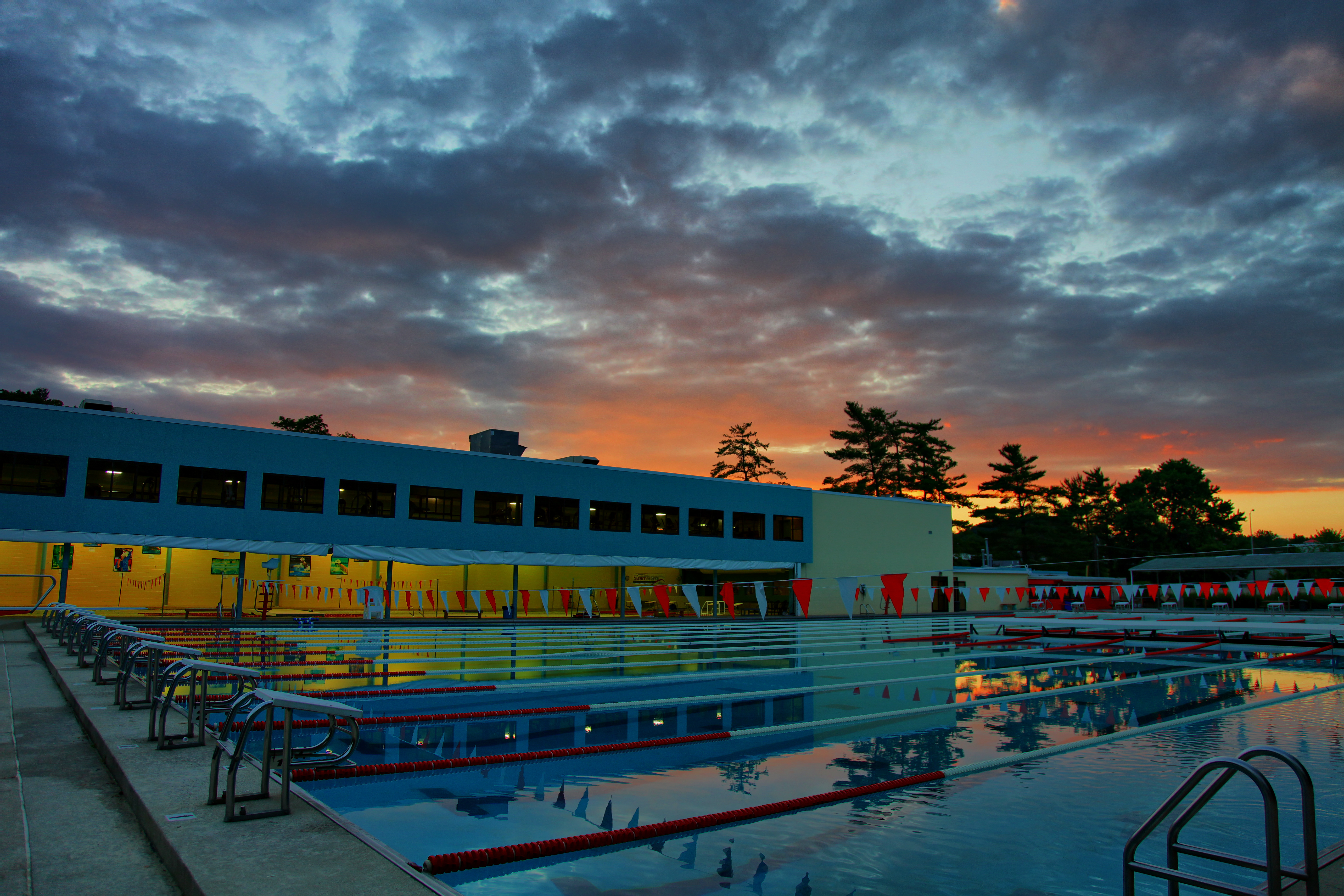
Meadowbrook was built in 1930 by the George Morris Company in the Mount Washington area of Baltimore near the intersection of Falls Road and Kelly Avenue. It was constructed on a level peninsula of land bordered to the west by the North Central Railroad (now the MTA Light Rail); to the east by the Jones Falls stream and Falls Turnpike (Falls Road); to the north by the Western Run stream and the Washington Cotton Mill (at the time Maryland Bolt & Nut Factory). Meadowbrook became an immediate neighbor to the Mount Washington Athletic Club.
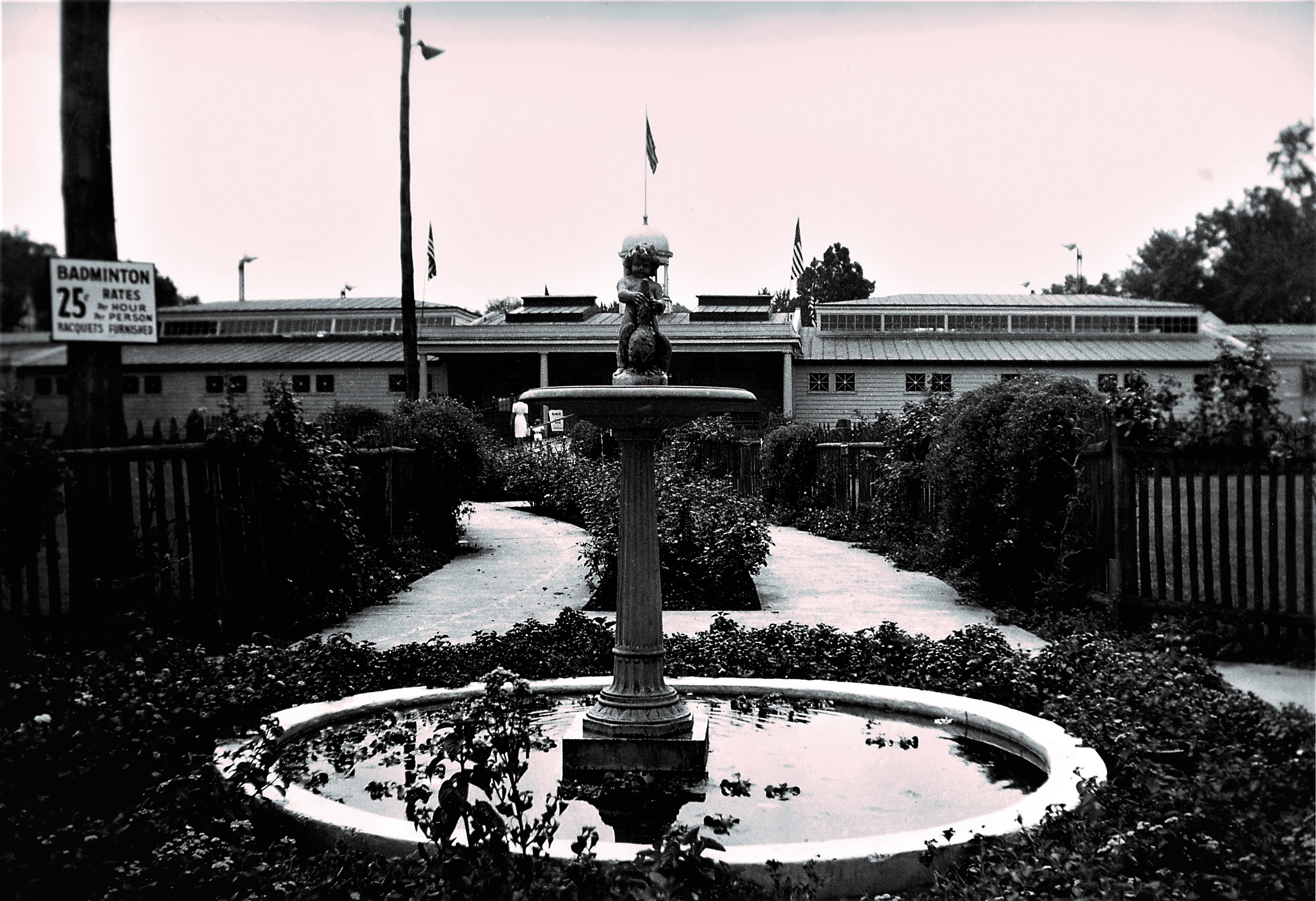
Entrance walk to Meadowbrook, late 1930's
Mount Washington had grown from a summer home community in the mid 1800’s to a thriving suburban community in the 1910’s and 20’s. A major streetcar line and commuter rail station served the community for transportation. As automobile traffic increased through the 1920’s, the Kelly Avenue Viaduct was constructed in 1926 to relieve the congestion at Smith Avenue and Falls Road at rush hours.
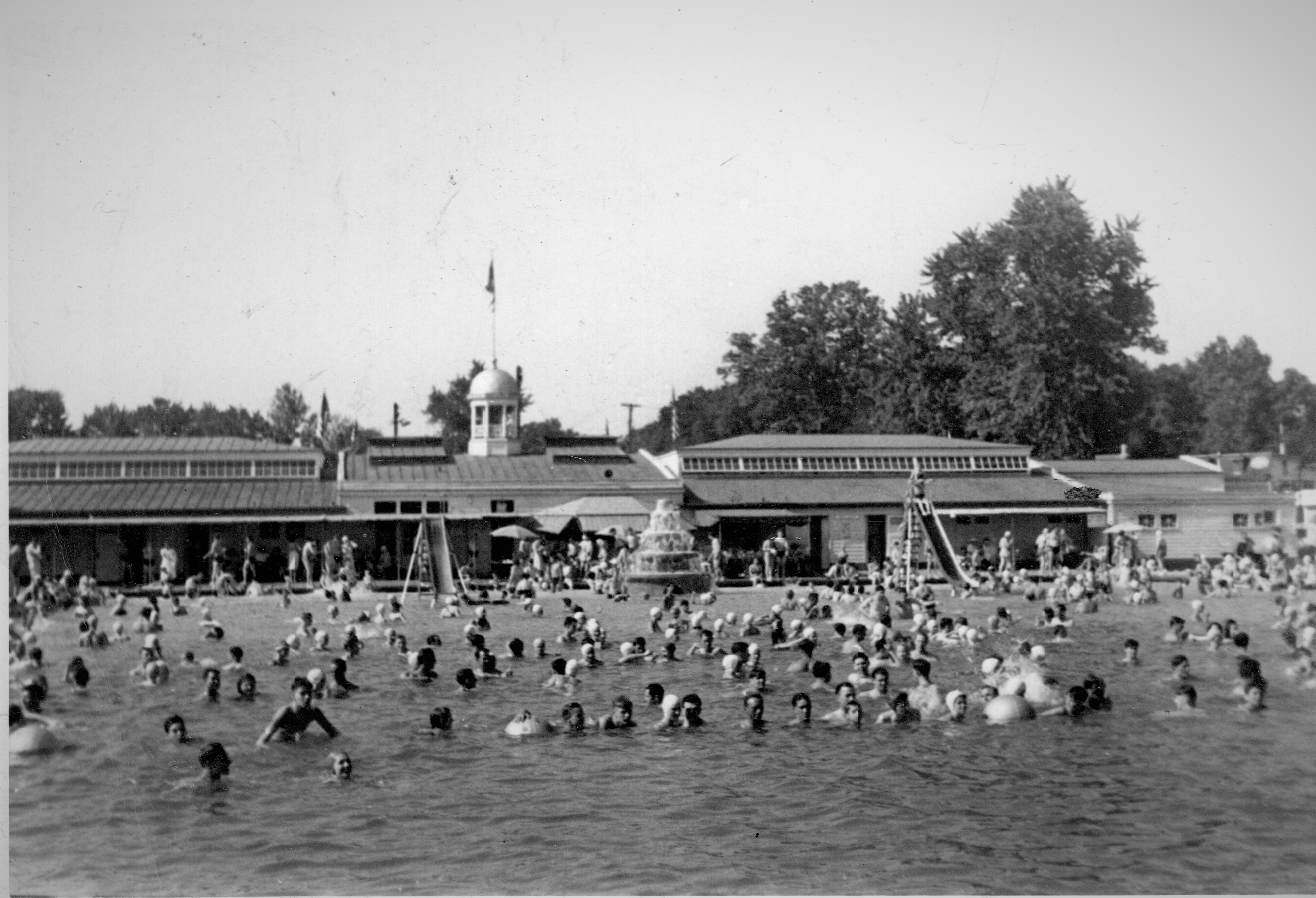
A Crowd watches a diving exhibition in 1934. Original clubhouse across the shallow end.
The Washington Cotton Manufacturing Company, a cotton mill constructed in 1810 and using the nearly Jones Falls stream as its power source, was a major employer in the area of row houses and semi-detached homes which sprang up along Washington (later Smith), Railroad Avenue (later Hooper and even later Forge) and Oliver Street. The area around the mill and the mill-workers residences became known as Washingtonville. The Methodist Church and Mill buildings were where they are now. The earliest significant settlement in the area was of mill workers at Washington Avenue and Oliver Street. These homes, some of which dated from the first decade of the nineteenth century, were razed to make room for the Jones Falls Expressway in the 1950s. This community, known as Washingtonville, predates Mount Washington by some forty years. The last of these Washingtonville homes stand at the intersection of Smith and Forge Avenues. A duplex home, one half of this house is now “The Framing Place”.
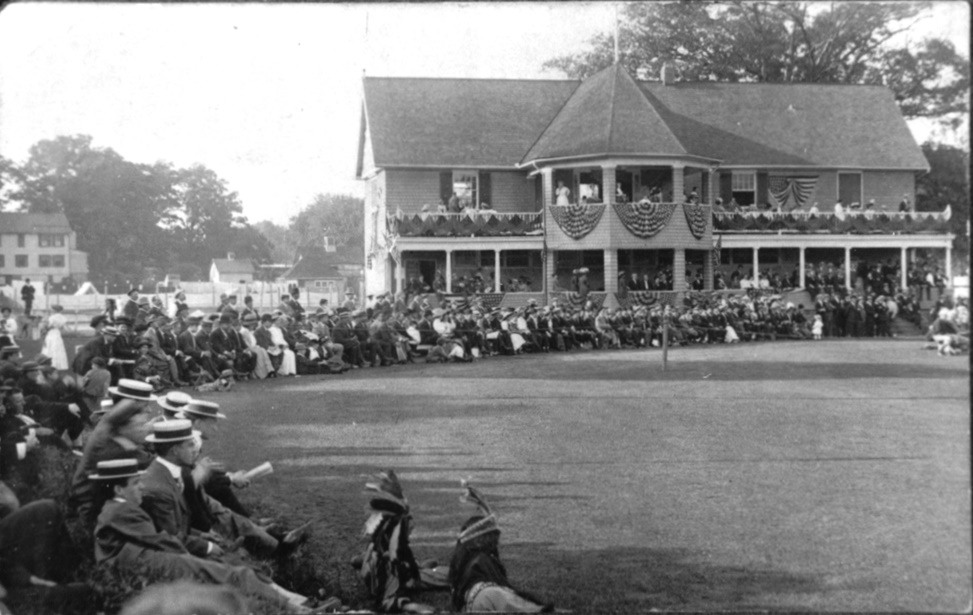
Mount Washington Club House in the early 1900's
The area where Meadowbrook now lies was once owned by William Hooper, proprietor of the Mill properties. According to local historian Mark Miller, (as) “early as 1876, passengers riding the cars of the North Central could watch cricket matches on the fields just east of the railroad tracks”. This property is currently under the JFX and Meadowbrook’s parking lot. Later, this area would become the Mount Washington Athletic Club, home of Norris Field and the Mount Washington Lacrosse Club. This property was condemned for the Jones Falls Expressway in the 1950’s and reconfigured in the present location of the Lacrosse Field and Mount Washington Club.
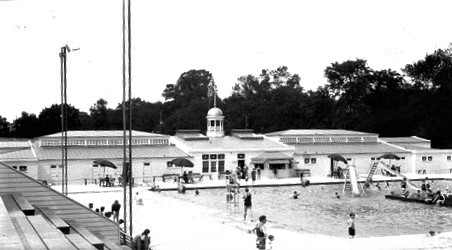
Meadowbrook's First Summer, 1930
Meadowbrook’s main pool was excavated using mule drawn shovels, while fill was brought by rail to raise the grade of the area around the pool. To have a pool twelve feet in depth, the deck grade needed to be raised some six to eight feet because the bottom of the proposed pool was below the water table due to the proximity of the Jones Falls stream. The floor, or deck of the pool was poured in three slabs and is intact today except for replacement pours at the seams. (Note, in 2018, the entire deep end and 1988 filtration system was replaced.) The filtration system consisted of a gravity filled surge pit fourteen feet in depth from which water was then pumped through four massive steel sand and gravel filter tanks. This filtration system had a flow rate of 1500 gallons per minute. These four tanks were unloaded at the Mount Washington train station. A wooden dressing room and snack bar facility was built along the northern edge of the pool deck (where the current shade canopy is by the shallow end.) (Note: Meadowbrook’s pool is laid out in standard pool configuration with the length running north/south to maximize sun catching on both long sides and to ensure that in either the morning or afternoon, when swimming laps or competing, you are never swimming into the sun.) A cupola topped the center of this building which had five flag poles flying American flags for the opening on May 30, 1930. Early photos and members recollections tell of elaborate rose gardens lining the walk from the Kelly Avenue viaduct which split to go around a fountain. A wooden bridge over the Jones Falls River served to carry swimmers from Falls Road. Lights atop steel poles on the east beach allowed for twilight and evening swims and entertaining.
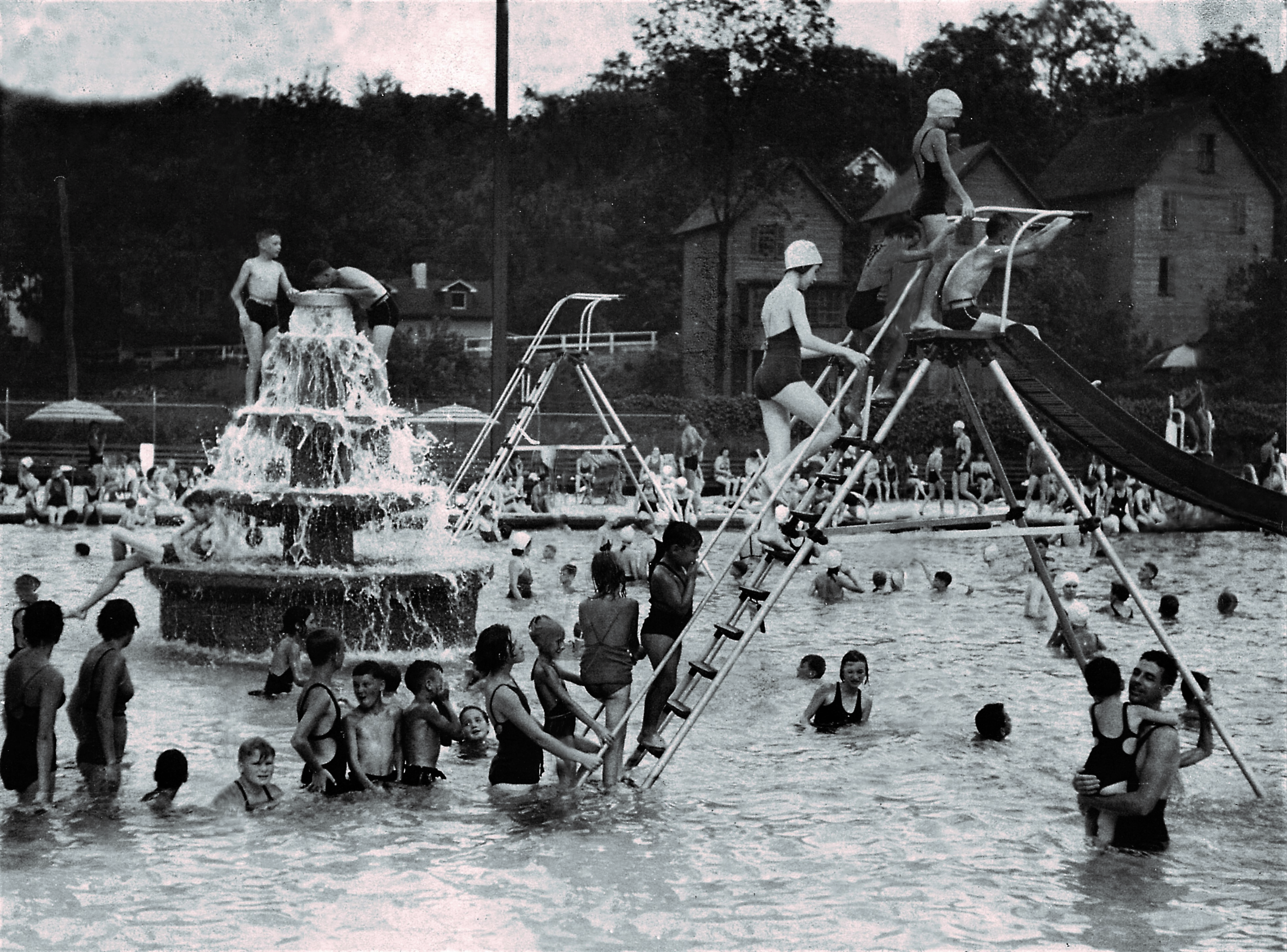
A busy day at the pool in the 1930's
Throughout the 1930’s continual additions and improvements along the western beach included a dance floor, orchestra area, stands for diving and swimming competitions. The nocturnal big band nights eventually led neighbors along Mattfeldt Avenue and others to file a suit against Meadowbrook seeking an injunction against nuisance noise in 1938. The Court of Appeals decision Meadowbrook Swimming Club, Inc. vs Talbot J. Albert et al is the precedent case cited in Maryland for noise complaints.
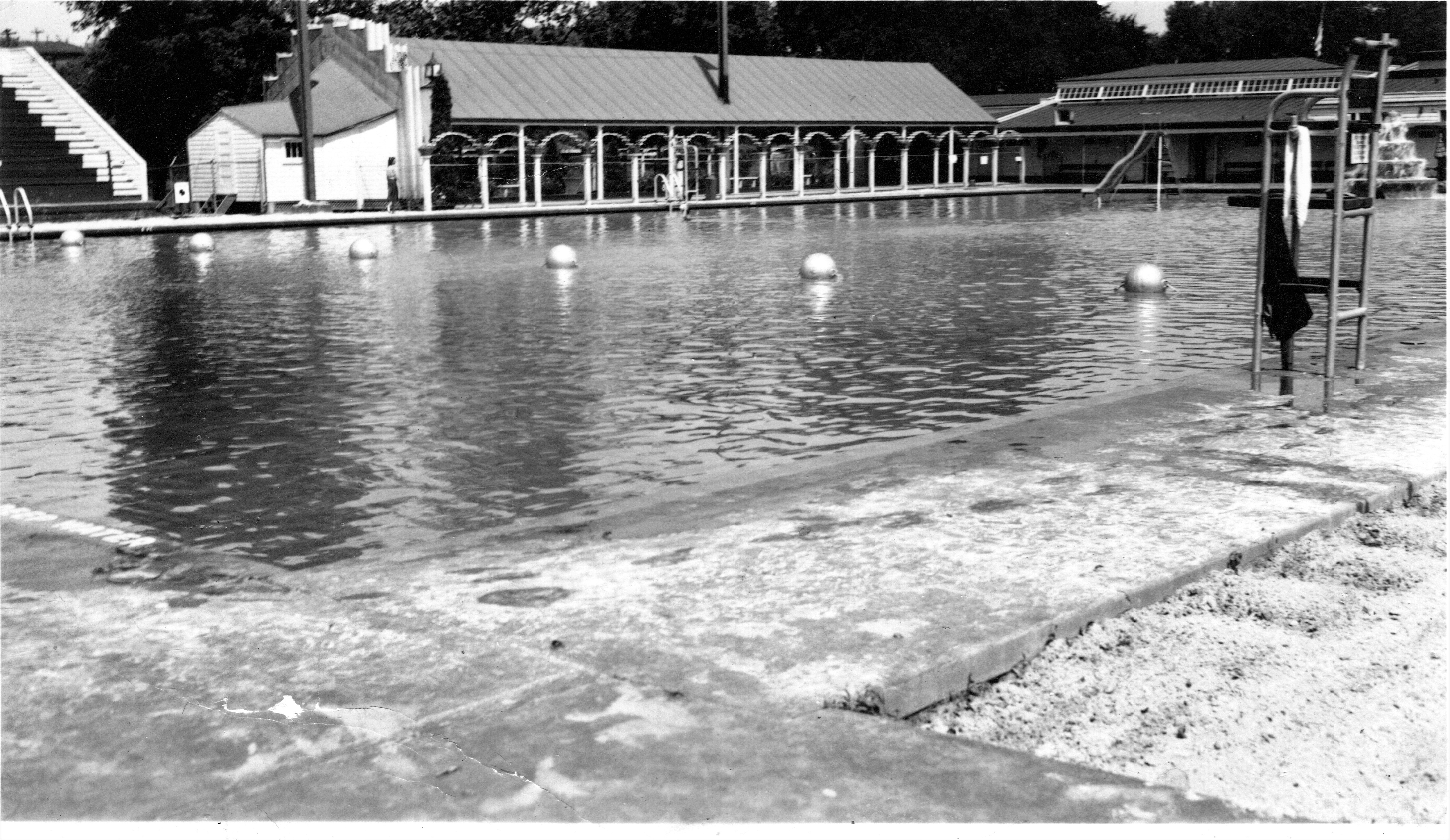
View from the Southeast corner of the pool showing the band shell and ballroom
Meadowbrook Swim Club became a favorite spot for Baltimoreans to escape the summer heat. The establishment of an electric street car line up Falls Road, across the confluence of the Jones Falls and Western Run, past Washingtonville and into the village of Mount Washington provided transportation to Meadowbrook for thousands of Baltimore families. The street car station, still standing, is part of the Mt. Washington Animal Hospital complex. During the 1930’s Meadowbrook became a showplace for diving and swimming competitions and exhibitions given by and including such notables as Buster Crabbe and and Olympic swimmers Ralph Flannagan and Margaret Hoffman. Writer F. Scott Fitzgerald is known to have spent many afternoons on Meadowbrook’s white sand beaches with his wife Zelda and their daughter, Scottie.
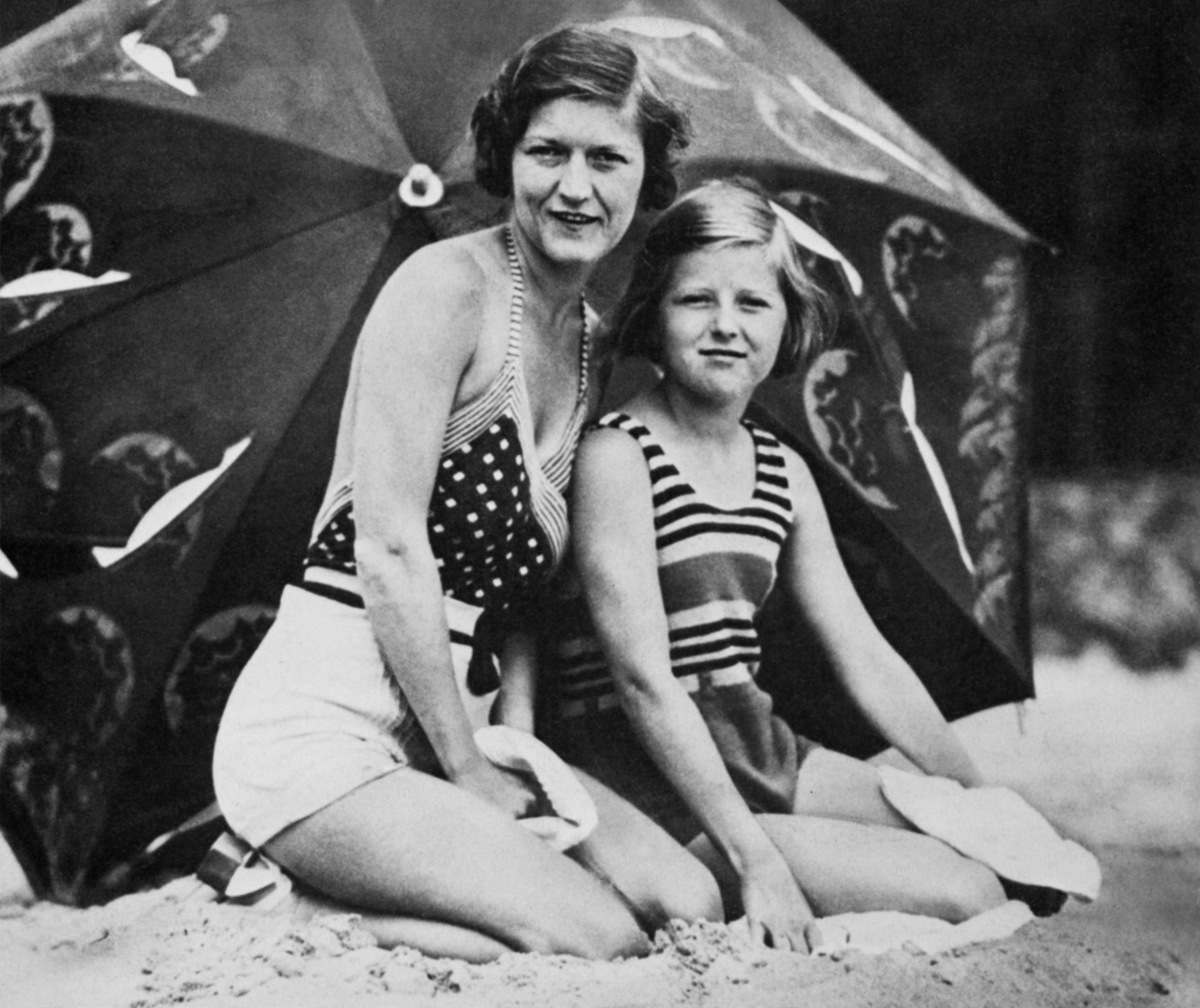
Zelda and Scottie Fitzgerald at Meadowbrook, 1933.
In May of 1944, the elegant wooden structures built in 1930 went up in an unexplained fire. The pool manager, Julius Ziegfeld told the Baltimore Sun that he was in the filter house preparing to turn on the water to the main pool when he noticed the fire. The buildings were quickly consumed only one week prior to opening for the season. Remarkable, in the war-rationed economy, the club was able to erect “temporary” locker facilities in only two weeks. Half of this “temporary” structure still stands as the current locker rooms, family changing room, and Snack Bar.
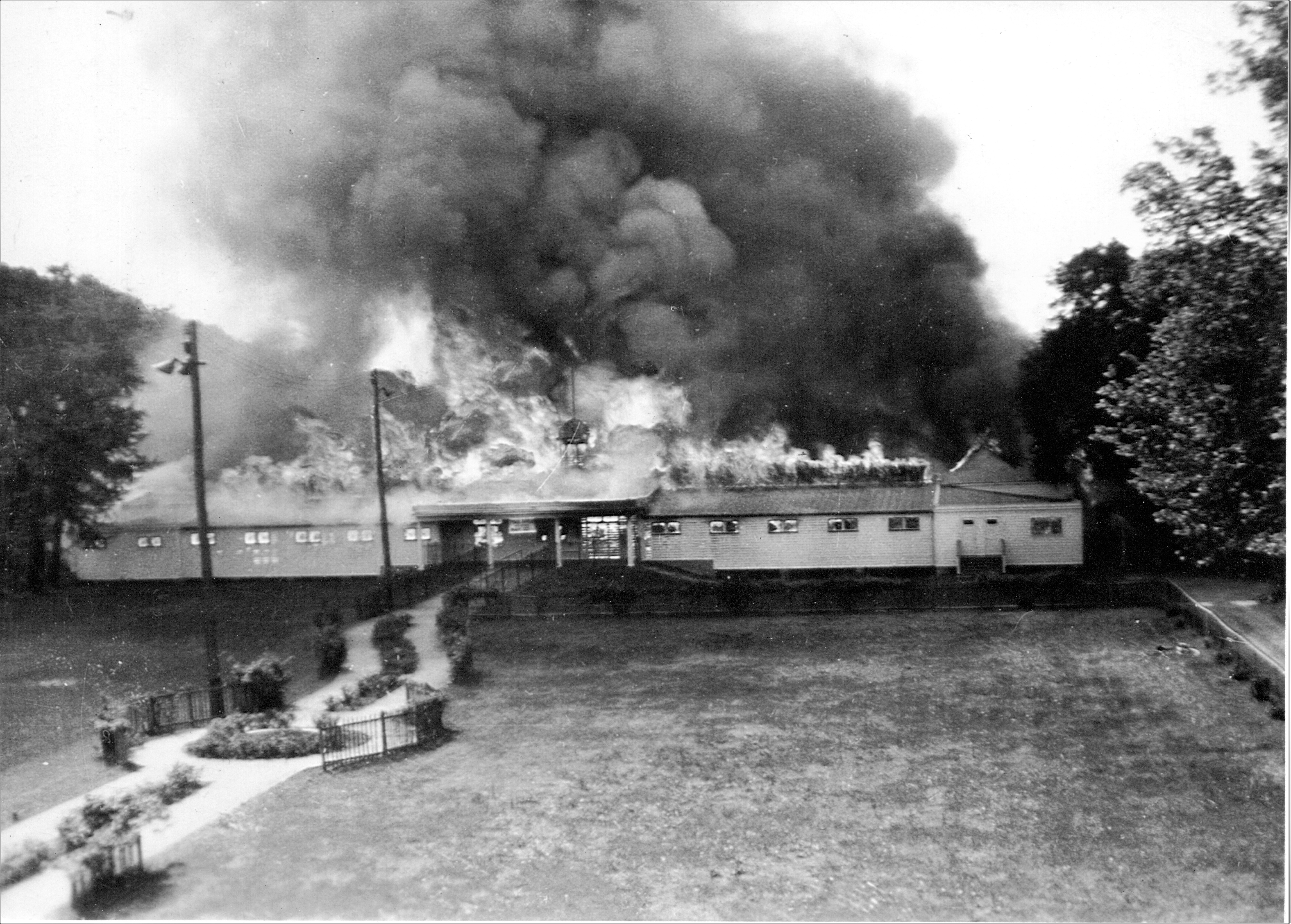
The Locker rooms and snack bar on fire May, 1944.
The next year, 1945, saw the first of only two ownership changes in Meadowbrook’s long history. Edith Stieber and Frank Roberts bought the pool and surrounding lands from the George Morris Company. Fred Stieber, Edith’s husband, had long been a fixture at Meadowbrook as a local and national caliber diver, as well as an outstanding lacrosse player for the Mt. Washington Club. Along with others, he performed many entertaining feats for the delight of weekend crowds. Meadowbrook continued to draw large summer crowds year after year as the baby boom began and tens of thousands of Baltimore’s youth became acclimated to the water at this Mount Washington gathering spot. Navy swimmer Bob Cowell competed at Meadowbrook leading up to the 1948 Olympic Swimming Trials, where he made the team and won a silver medal in London.
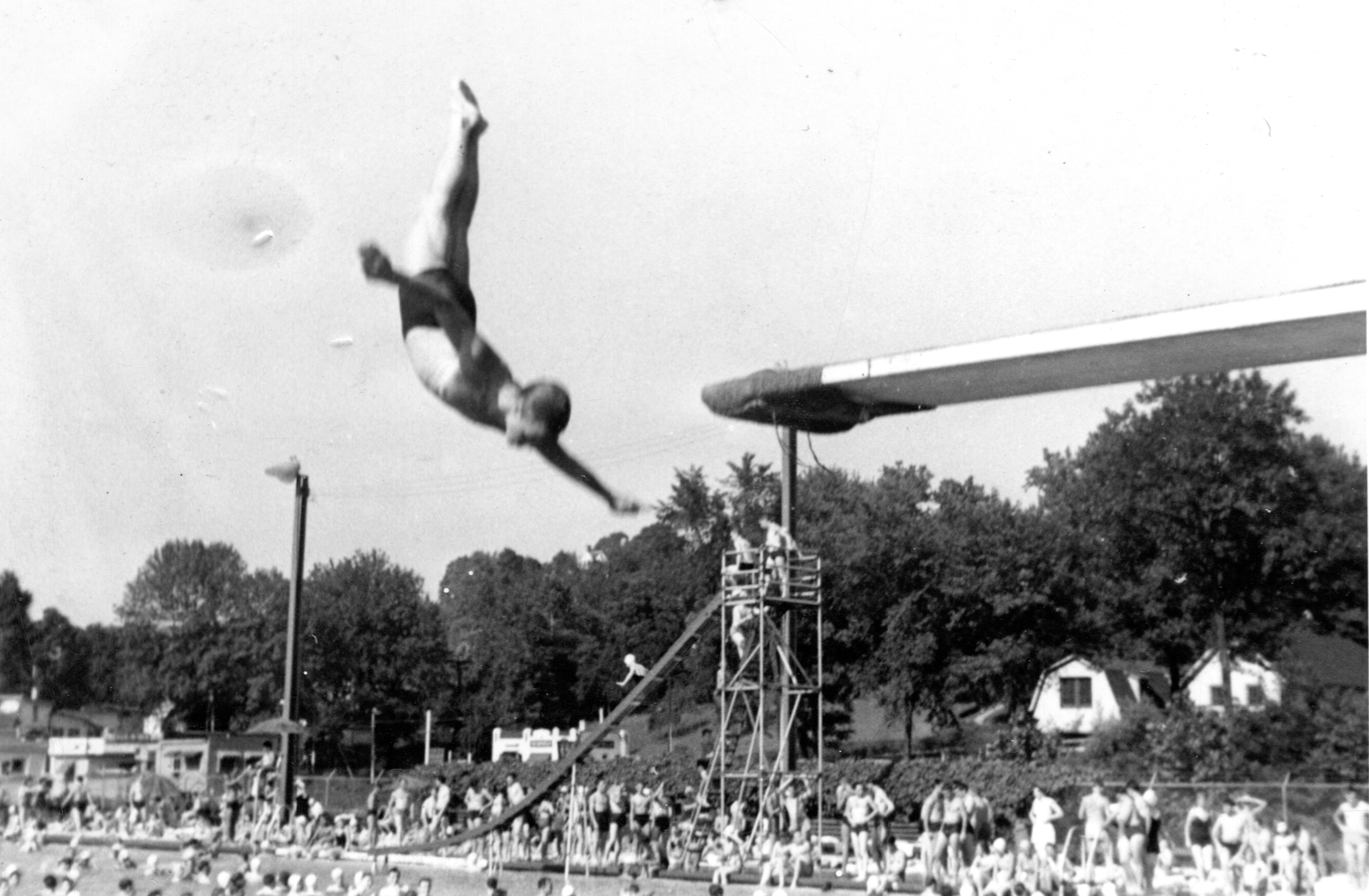
Fred Stieber executes a dive in 1944.
In the mid to late 1950’s, the Stiebers planned and built an Ice Rink on the north end of the property, Also in the 1950’s, Meadowbrook arranged a land swap with the Mt. Washington Club and Lacrosse Club to accommodate their need for a new location since their existing land lay in the path of the projected Jones Falls Expressway.

The Meadowbrook Ice Club, Meadowbrook Swim Club in background
Meadowbrook was challenged by disaster twice in the 1970’s. This time it was not fire but water which brought destruction to the facility. In June of 1972, Hurricane Agnes, first of the Atlantic Hurricanes, roared up the East Coast of the United States, and after crossing over land became a Tropical Storm.
This storm passed up the Chesapeake Bay and settled over central Pennsylvania dropping incredible amounts of rain. Flooding was widespread in the Maryland and Pennsylvania regions. Places with flood histories like Johnstown, PA and Ellicott City, Maryland were inundated with water and mud. The Jones Falls Valley was likewise hit. Meadowbrook was under water and even the Jones Falls Expressway was closed. It was weeks of digging out and repairs. The Stiebers sold the Ice Rink shortly afterwards in 1973. The next flood was actually a worse flood for Mount Washington and Meadowbrook than Agnes. Hurricane David in 1979 caused damage in the village of Mount Washington as well as putting the entire peninsula where Meadowbrook is situated under six feet of water. With improvements to the dam at Lake Roland, and work by the city, state, and federal agencies along the shores of the Western Run and Jones Falls, it is hoped that floods of this magnitude are a thing of the past. Recent heavy downpours during summer th understorms in June of 1996, reminded Meadowbrook and its neighbors in the Flood Plain how quickly the waters can rise at the confluence of these two streams.
By the 1980’s after floods and almost 60 years of summer wear and tear, Meadowbrook was in need of some serious renovations and improvements. The original 1930’s filter system was not keeping up and some of the attractions like the big slide were becoming insurance liabilities in an increasingly litigious age. North Baltimore Aquatic Club founder and coach Murray Stephens had been renting the pool to work out his national and international level swimmers in the mornings before Meadowbrook opened. In 1986, Murray and his wife Patricia made an offer to purchase Meadowbrook.
The first work done was on the pool itself. The Stephens’ plan was to bring Meadowbrook into national and even international prominence as an aquatics training center while maintaining Meadowbrook’s reputation as a summer family recreational space. This required making a wall in the pool at the 50 meter line in the shallow end of the main pool which created a fine shallow end / deep end demarcation for families with young children. The many layers of paint which had accumulated were sandblasted off. The high dive and slide were removed due to their age (almost 60 years). The following winter saw the replacement of the filtration system and the addition of a stainless steel gutter system. This more efficient high rate sand filter also boosted the water flow rate from 1550 gallons per minute to 2,000 gallons per minute an increase of one-third of the overall flow rate. This insures cleaner and clearer water. Successive years saw incremental renovations which renovated the locker rooms, created a Pro Shop, and enclosed the Snack bar area. The deteriorating decks were re placed, a permanent shade canopy was erected, and plans were made for the largest single improvement – the construction of an indoor aquatic and fitness center.
Owners Murray and Patricia Stephens had dreamed of creating in Baltimore an aquatics venue comparable to any in the United States. Murray, at the time an English teacher and swim coach at Loyola High School Blakefield had been widely successful with swimming teams on various levels for almost twenty five years. His high school teams were perennially ranked among the top prep school teams in the country even winning the prestigious National Prep School Championship in 1980. Additionally, his North Baltimore Aquatic Club team had been represented at every Olympic Trials from 1968 through 2016 placing Theresa Andrews on the team who at the Los Angeles Games in 1984 went on to win two gold medals in Backstroke. Breastroker Anita Nall won a gold, silver and bronze medal at Barcelona in 1992. Backstroker Beth Botsford swam to 2 gold medals in 1996. At the time, based at Loyola High School’s pool and renting additional space at Towson University, NBAC was considered one of the finest age-group clubs in the country. Murray long dreamed of a facility which could be used for competitive swimming while developing a recreational space for families and providing spacious and convenient lap swimming opportunities in one location.
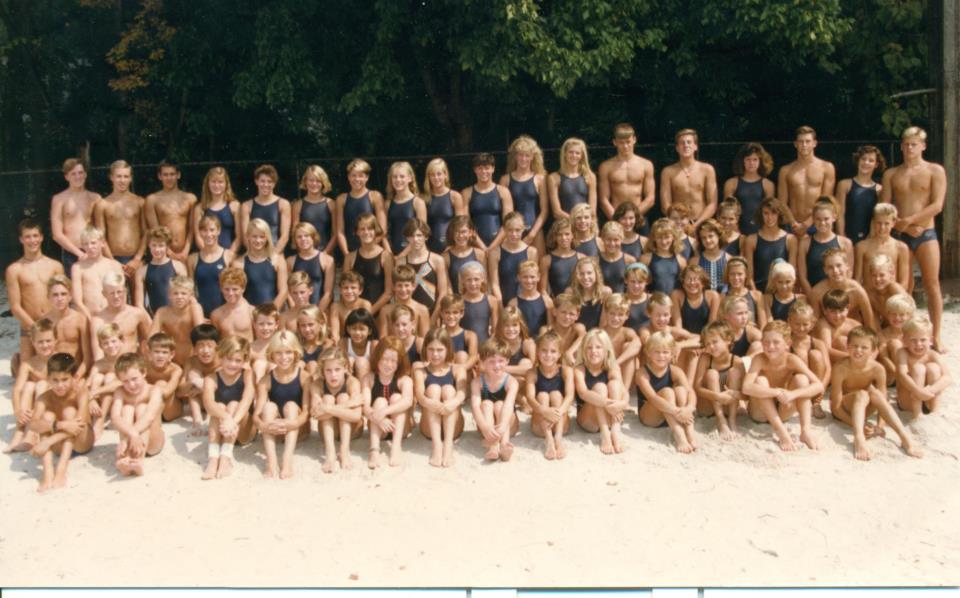
The 1991 NBAC Team on the beach at Meadowbrook.
Five Olympic Swimmers and one Olympic coach are in this photo.
At first, the Stephens’ contemplated a bubble enclosure over the existing outdoor pool. Due to Meadowbrook’s location within a federally designated flood plain, this plan was rejected. A building permit was applied for and designs were proposed which would allow the flood waters during a 100 year flood event (such as David in 1979) to flood the area of Meadowbrook without impacting the height of waters to the south of the facility. After a very detailed flood report was prepared showing that a three sided pavilion with tear away fabric which would allow the flood waters to ‘flow through’ the new building was completed, the permit application proceeded through federal, state and city authorities. Ground was broken in December, 1994 after the site had been cleared. Meadowbrook acted as its own general contractor with Mike Lears as the construction manager. Financing was arranged through Carrollton Bank. The pool was finished in mid-June 1995 with the fitness center and the therapy lesson and hot tub pools were completed shortly after. An official opening took place in September 1995. The merging of the North Baltimore Aquatic Club and Meadowbrook from 1995 to 2009 made the club synonymous with Olympic swimming success.
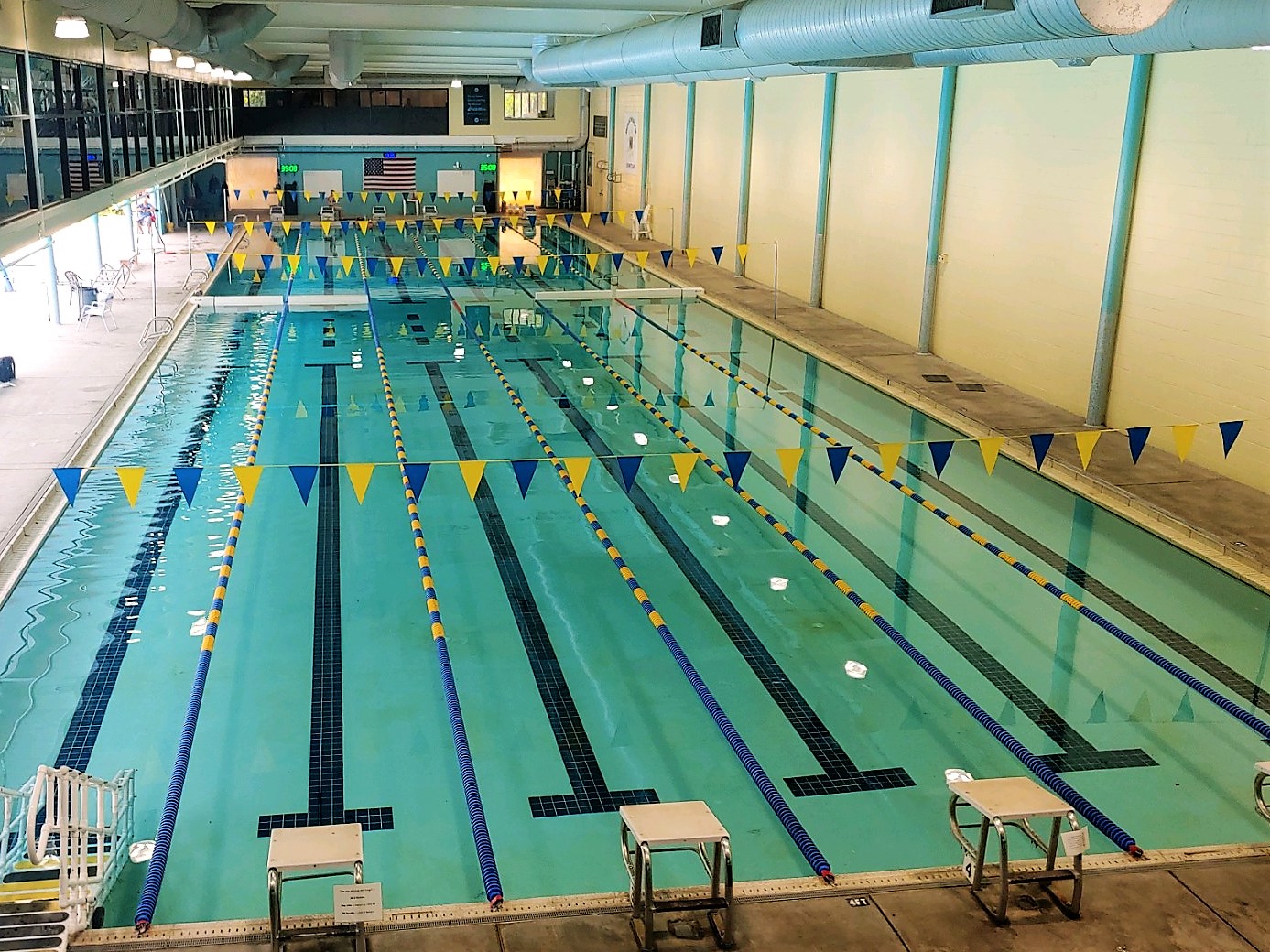
The Indoor Pool officially opened September 15, 1995
The final major modification, the construction of a 2800 square foot children’s recreational pool was initiated in 1997 and completed in June of the same year. Once again, Meadowbrook management oversaw the reconstruction of the pavilion and the decks of this fantastic and entertaining pool.
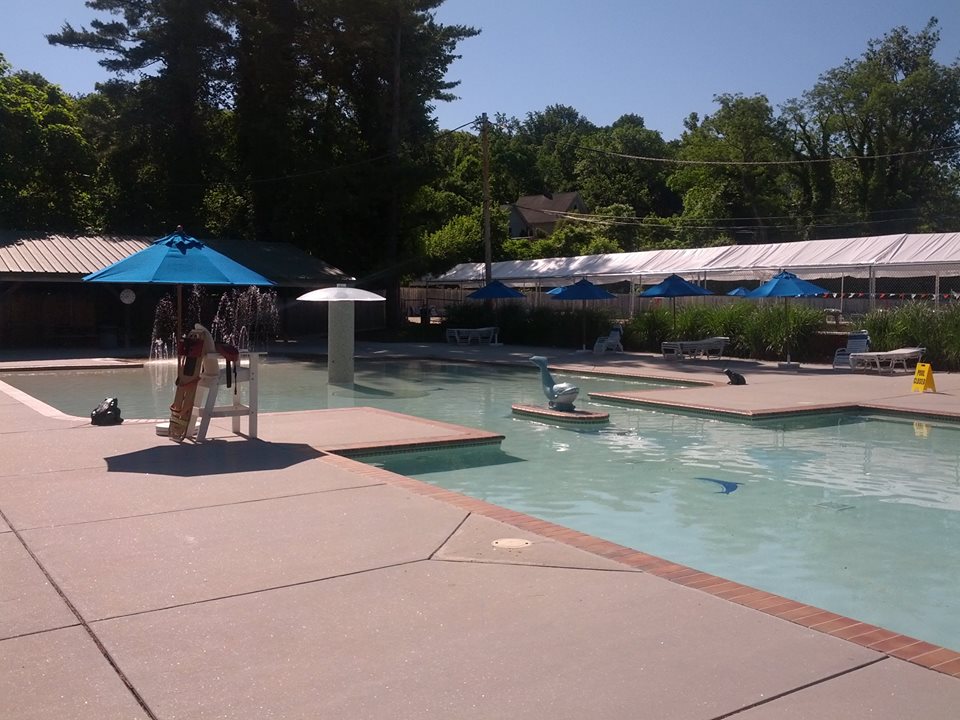
The Cildren's Pool built in 1997.
The Coppermine organization purchased Meadowbrook from the Stephens in March of 2024. The Coppermine Meadowbrook Club stands as strong as it ever did as a family oriented year round facility which balances the needs of the diverse membership from swim lessons to aquatic therapy to lap and national and international level swimming, along with a state of the art fitness center, exercise studio, weight room and seasonal pickleball courts. At Meadowbrook, swimmers can start in First Splash, our parent and child level of lessons and progress through our six tiered instructional program to Summer League to swimming year round for the Meadowbrook Swim Team. We also offer Masters Swimming six days a week. Meadowbrook makes swimmers!