News
Can children swim when they're sick or have cuts and scrapes? It's fine for children who have colds or other minor illnesses to swim, as long as they feel well enough to do so. Likewise, it's OK for children to swim with cuts and scrapes — as long as the wounds aren't bleeding.
"J" is for Juggling Athletes are dedicated. They are committed. They are willing to make sacrifices in their lives to help their sport performance. However, when you take this commitment to their sport and add a similar level of commitment to their academics, social lives, work and family, it can lead to a very difficult juggling act. Take “Christina” for example. She is an athlete whom I work with that did not play well partly because she had done poorly on a paper and was stressed about it and partly...

Nutrition for Kids Grain Group foods give us carbohydrates (car-bo-hi-drate). Carbohydrates give us the energy we need to play, learn, sleep and keep our bodies running 24-7! Grain Group Foods come from many different grain plants: wheat, oats, rye, barley and rice. "Whole-grains" like whole-wheat bread, also provide fiber and other substances that help keep us healthy. Fiber also helps us digest our food. Try to choose whole-grain foods from this group. There are many foods to choose from in the Grain Group: bread: white, wheat, rye, buns, rolls, muffins,...
What's the best age to begin swimming lessons? The American Academy of Pediatrics supports swimming lessons for most children age 4 and older. If you choose to enroll a child younger than age 4 in a swimming program, pick one that doesn't require placing his or her head underwater. This will limit the amount of water your child may swallow.
"I" is for Injuries When you work hard, push yourself to your limits and engage in physical activity, you are not only competing with other swimmers, you are also competing with your body. If you have ever been injured, you know how stressful and life-altering it can be. Whether it’s the disappointment of having trained so hard and no longer being able to compete or the feeling of being an outsider rather than a part of the team, there are many sources of injury stress. It is important to know...
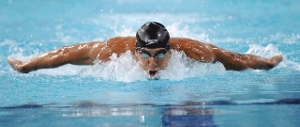
PHELPS TAKES 49TH CAREER NATIONAL TITLE Courtesy of USA Swimming IRVINE, Calif. – With wins in the men’s 200m free and 200m butterfly Wednesday at the 2010 ConocoPhillips USA Swimming National Championships, Michael Phelps now holds more national titles than any other swimmer in history with 49, surpassing the 48 titles held by swimming legend Tracy Caulkins. His performance in the 200m free was the fastest time in the world this year, edging Ryan Lochte 1:45.61 to 1:45.78. In that race, Phelps led the field the entire way, but Lochte...
The Road to Nationals-Leisel Jones In 2008, Rebecca Soni’s break out 200m breaststroke in Beijing set the world record and upset gold medal favorite Leisel Jones of Australia. In 2009, Soni won her fourth consecutive NCAA title in the 200yd breaststroke, set a world record in the 100m breaststroke at World Championships and won the Golden Goggle for Female Swimmer of the Year. Now training with Dave Salo and other postgraduates at Trojan Swim Club, it looks like 2010 is gearing up to be another record-setting year. Soni picked up...
"H" is for Having Fun I think that having fun is, in fact, a mental skill. Most people believe having fun is as easy as getting involved in something you enjoy, which is true. However, what happens when what you enjoy also becomes a source of pressure, anxiety, fatigue and pain? Most athletes start swimming because they love being in the water and enjoy being with their friends. When they decide to turn their “hobby” into a competitive activity is when some of the “fun” can be taken away. That...
Is it risky for children to swallow pool water? Your child is bound to take a few gulps of pool water at one time or another, especially when first learning to swim. A little swallowed pool water isn't cause for concern, but drinking too much pool water can make a child ill.
"G" is for Goal Setting Every athlete has a goal. Whether it’s to win races, achieve a personal best, or simply make it through a grueling practice, the goals we set undoubtedly exert influence on our performance. However, there’s a lot more to goal setting than just stating what it is you ultimately want to achieve. To get the motivational support and performance boost that goals can provide, athletes must set goals systematically and have various types of goals. This article will lead you through steps to setting goals so...