



Time Standards
Qualification time standards are set by the various governing bodies that come under the umbrella of USA Swimming. Championship meets require swimmers to meet or exceed these standards.
National Age Group Motivational Times
(B, BB, A, etc., by age/gender for short course yards, short course meters, and long course meters)
South Texas STX will be BB times by age group and gender, according to the National Age Group Motivational Time standards.
South Texas STAGS will be A and faster times by age group and gender, according to the National Age Group Motivational Time standards.
Championship Swim Cap

STX/BB Caps

A Time Standard

TAGS/Sectionals
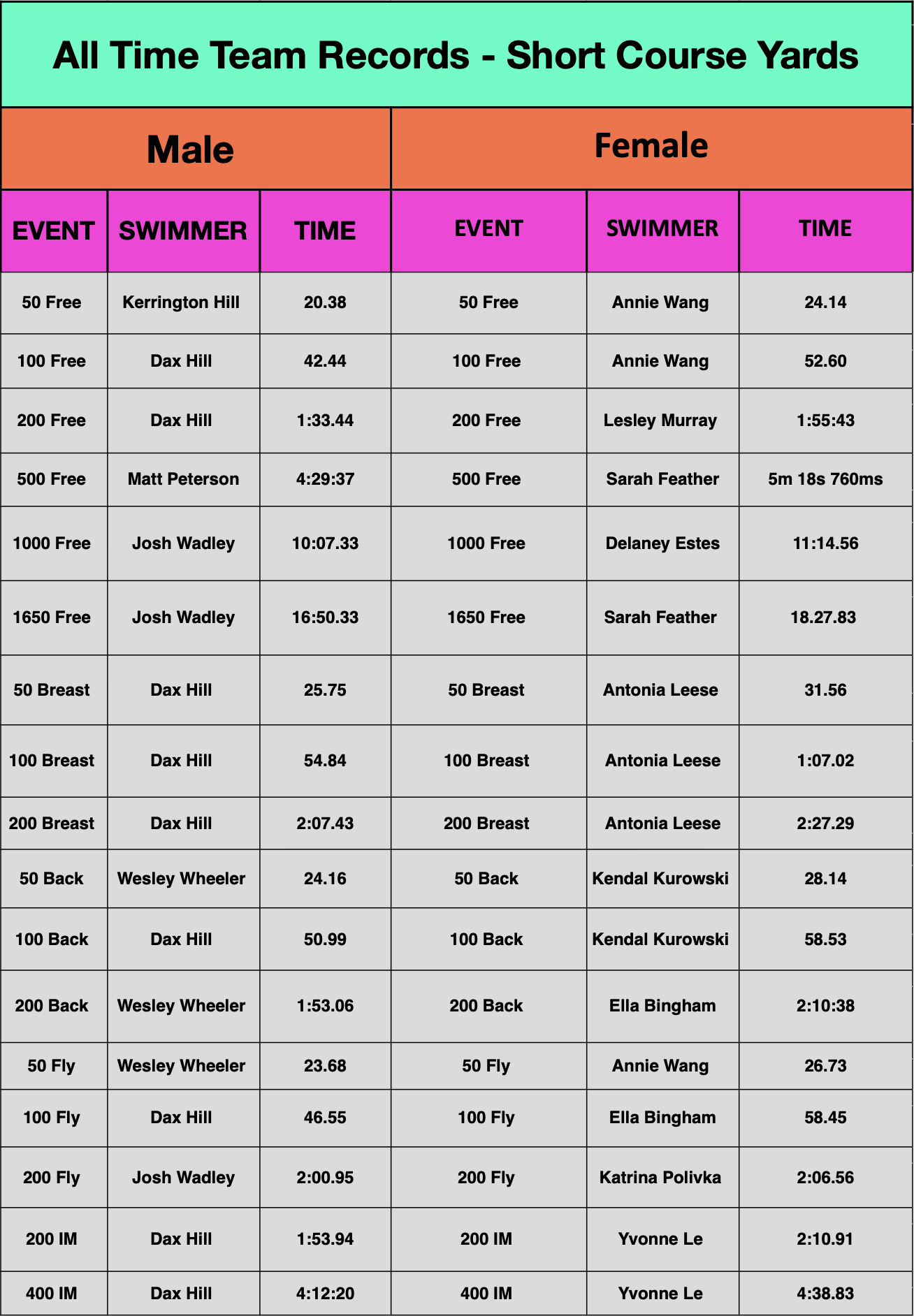
Team Records - Short Course Yards
Virtual Championship Score
The Virtual Championship Score (VCS) used by USA Swimming is a ranking system designed to compare the performance of swim teams across the country, regardless of the size of their program or geographic location. Here's an overview of how it works:
1. Performance-Based Scoring
The VCS is based on individual swim performances from various sanctioned meets. Each performance earns points based on time standards, which are converted into a score using a standard points system (such as FINA points). This levels the playing field by comparing performances against a universal standard rather than head-to-head competition.
2. Team Aggregation
The points earned by individual swimmers are then aggregated to generate a total score for the entire team. This allows for a virtual "championship" ranking, where teams can see how they stack up against other clubs across the country based on the overall quality of their performances.
3. Inclusivity Across Teams
One of the key benefits of the VCS is that it allows smaller teams or teams in less competitive areas to be part of a national ranking system. Instead of only comparing performances from a specific meet or regional competition, the VCS pools data from various meets to create a national comparison.
4. Adjustments for Age and Event
The system may also take into account the age of swimmers and the type of events swum, ensuring that performances from different age groups and event specialties are weighted fairly when calculating the overall score for a team.
5. Seasonal and Annual Rankings
Rankings are typically calculated at different points during the season or year, allowing teams to track their progress over time. This can be especially motivating for swimmers and coaches who aim to see their team rise through the rankings as the season progresses.
The Virtual Championship Score is a great way to foster nationwide competition and measure success without the need for direct head-to-head meet participation, providing a broader perspective on team performance.
